

A writing podcast for writers and curious readers, featuring interviews with authors, poets, agents and editors. Twice chosen as one of Writer’s Digest Magazine’s 101 Best Website for Writers. Vermont-grown.
Episodes

Jun 15, 2011
Jun 15, 2011
48 min
Marilyn Graman, New York psychotherapist and co-principal of Life Works, an organization "committed to supporting people in having lives that are healthy, fulfilled and satisfied." Life Works books include The Female Power Within, There is No Prince, and How To Be Cherished.
During our interview, Marilyn mentioned a recent article about her work in the web-zine New York City Woman. You can find that article by clicking here.
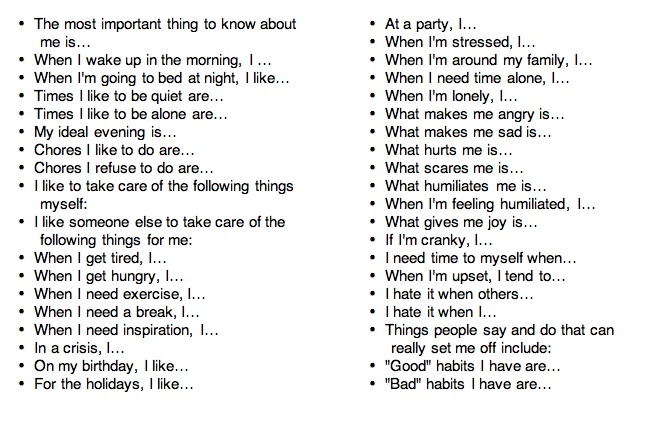
This week's Write The Book Prompt was inspired by the conversation you heard today with Marilyn Graman. The prompt is based on an exercise from How To Be Cherished, by Marilyn Graman and Maureen Walsh with Hillary Welles. If you write memoir or autobiographical poetry, create a "Care and Feeding Manual" about yourself. If you write fiction or biography, create one for one or more of your characters. In the book, a Care and Feeding Manual is described as "a fun and helpful way for your man to know you better." In the case of this week's prompt, creating such a manual can be a way to get better acquainted with the subject of your work, be that you yourself, or a character.
Below are several of the points that might be included in a "Care & Feeding" manual for your subject. These are all based on the work of Marilyn Graman and Maureen Walsh, from their book, How To Be Cherished (although I've edited the list to make it a bit more character-relevant, a bit less relationship-relevant). Many thanks to Marilyn Graman for permission to base this prompt on the Care & Feeding exercise in the book.
 Good luck with this exercise and please listen next week for another.
Music credits: 1) “Dreaming 1″ - John Fink; 2) “Filter” - Dorset Greens (a Vermont band featuring several South Burlington High School students)
Good luck with this exercise and please listen next week for another.
Music credits: 1) “Dreaming 1″ - John Fink; 2) “Filter” - Dorset Greens (a Vermont band featuring several South Burlington High School students)
Jun 11, 2011
Jun 11, 2011
33 min
Vermont Poet Jody Gladding, author of Rooms and Their Airs, published by Milkweed Editions. This week's Write The Book Prompt is inspired by Jody Gladding's poetry and her focus on the natural world. Go for a walk in an outdoor place of your choosing. It can be in your back yard, in the woods, on Church Street, in the parking lot at your local mall. Wherever you'd like. Bring along a notebook and record sounds, smells, sights. Be sure to record some detail of nature that you find in whichever environment you choose. And also record at least one detail that reflects man's influence on the surroundings you've chosen. Set your notes aside, but continue to consider what you saw and perhaps experienced on your walk. A day or two later, write a poem about your walk and try to include the details you noted. Good luck with this exercise and please listen next week for another. Music credits: 1) “Dreaming 1″ - John Fink; 2) “Filter” - Dorset Greens (a Vermont band featuring several South Burlington High School students)
May 24, 2011
May 24, 2011
53 min
Cathy Ostlere, Canadian Author of the memoir Lost and the recent YA novel in verse, Karma. This week's Write The Book Prompt was inspired by the work of my guest Cathy Ostlere, whose new novel, Karma, is written in verse. Look through your creative writing file on the computer or in the bottom of your desk drawer and pull out an idea you've previously shelved, thinking it wouldn't amount to anything. Now look at it anew, and consider what might happen if you were to develop a certain character whose life or situation might be relevant to this idea by working in verse. You can try rhyming verse, or simply play with rhythms. See if something new comes out of that idea simply because you're playing with words in a different way. Good luck with this exercise and please listen next week for another. Music credits: 1) “Dreaming 1″ - John Fink; 2) “Filter” - Dorset Greens (a Vermont band featuring several South Burlington High School students)
Apr 19, 2011
Apr 19, 2011
46 min
Nonfiction Author Susan Kushner Resnick, whose latest book is Goodbye Wifes and Daughters, published by University of Nebraska Press. This week's Write The Book Prompt was suggested by my guest Susan Kushner Resnick, who occasionally assigns this exercise to her students. Describe a loved one's body part. For example, describe your brother's eyebrow. Or your best friend's teeth. This allows you to get very specific and paint a small, detailed picture about someone you know well. Good luck with this exercise and please listen next week for another. Music credits: 1) “Dreaming 1″ - John Fink; 2) “Filter” - Dorset Greens (a Vermont band featuring several South Burlington High School students).
Apr 13, 2011
Apr 13, 2011
57 min
Scientist and Memoir Writer Cardy Raper, Author of Love, Sex & Mushrooms: Part 2 of a 2-Part Interview With New Vermont Writers. This week's Write The Book Prompt is inspired by National Libraries Week. The state slogan for this year's celebration is: "Vermont Libraries can take you anywhere." This week, find inspiration at a local library. Go sit in the reading room, people watch, chat with the librarian. Browse the shelves. Browse any fliers, posters or announcements in the lobby. Find out what online services your local library provides, and then browse those sites. Keep your mind open and your pen ready. Then write. Good luck with this exercise and please listen next week for another.
Apr 13, 2011
Apr 13, 2011
24 min
Novelist Jack Scully, Author of Eyewitness: Part I of a 2-Part Interview With New Vermont Writers. This week's Write The Book Prompt is inspired by National Libraries Week. The state slogan for this year's celebration is: "Vermont Libraries can take you anywhere." This week, find inspiration at a local library. Go sit in the reading room, people watch, chat with the librarian. Browse the shelves. Browse any fliers, posters or announcements in the lobby. Find out what online services your local library provides, and then browse those sites. Keep your mind open and your pen ready. Then write. Good luck with this exercise and please listen next week for another.
Apr 7, 2011
Apr 7, 2011
39 min
Novelist Kate Atkinson, Winner of the Whitbread Award and Creator of Bestselling Mysteries Featuring Detective Jackson Brodie. Her latest is Started Early, Took My Dog. This week's Write The Book Prompt is inspired by the interview you heard today with bestselling novelist Kate Atkinson. This one's simple. Find a line in a poem you like, and let it grow to become something you can write about. Not necessarily what the poet was writing about. In our interview, Kate Atkinson said that she began this book knowing only that she wanted to use Emily Dickinson's line, "Started Early - Took My Dog," for the title. She said during our talk that if you know your title in this way, "you don't have a blank page, you have something written down. ... it gives you a focus for your thoughts." Whether you use a favorite line of poetry as a title for another work, or merely as inspiration is up to you. Give it a try, and see if the blank page looks less daunting in this way. Good luck with this exercise and please listen next week for another. Music credits: 1) “Dreaming 1″ - John Fink; 2) “Filter” - Dorset Greens (a Vermont band featuring several South Burlington High School students).
Mar 22, 2011
Mar 22, 2011
49 min
Nancy Marie Brown, author of the new nonfiction book The Abacus and The Cross, which Kirkus Reviews has called "an engrossing account of the Dark Ages and one of its Popes, both far less dark than popular histories teach" and "a lively, eye-opening portrait of a sophisticated Europe whose intellectual leaders showed genuine interest in learning." This week's Write The Book Prompt is inspired by the interview you heard today with Nancy Marie Brown, whose book, The Abacus and The Cross, challenges common notions about life and understanding in the Dark Ages. In your work this week, try to include one thing that challenges a myth or popular conception. It can be historic, cultural, medical ... Good luck with this exercise and please listen next week for another. Music credits: 1) “Dreaming 1″ - John Fink; 2) “Filter” - Dorset Greens (a Vermont band featuring several South Burlington High School students).
Mar 15, 2011
Mar 15, 2011
53 min
Donald and Lillian Stokes, authors of The Stokes Field Guide to The Birds of North America. This week's Write The Book Prompt is inspired by the interview you heard today with Donald and Lillian Stokes. Settle yourself in a comfortable spot where you can spot birds. Either go outside, if it's a lovely day, or sit in a window where you can see birds coming and going. Choose a bird and write as full a description of it as you possibly can. Here's an example from the Stokes' Guide. The Rock Sandpiper is a medium-sized, fairly rotund, short-legged sandpiper with a strongly tapered fine pointed bill that droops slightly at tip. After you record as much detail about the bird's shape, coloring and movements as you can, take that description and use it to fill out details about a character in your work. Mr. Piper was a rotund man of medium height whose short legs made him walk with an amusing little hop. He had a strong nose that drooped at the tip, as if pointing out that he had no chin at all. Good luck with this exercise and please listen next week for another. Music credits: 1) “Dreaming 1″ - John Fink; 2) “Filter” - Dorset Greens (a Vermont band featuring several South Burlington High School students).
Feb 15, 2011
Feb 15, 2011
59 min
Interviews from the Archives: Literary Agent Douglas Stewart and Vermont Author and Illustrator Amy Huntington. I never announced the prompt on today's show (oops!) but here's one to try, inspired by Amy Huntington's latest work: Grandma Drove the Snowplow. Consider a line of work that might seem unlikely for a certain character, and try to bring them together. How about a librarian with a boisterous personality and loud, grating laugh? A pharmacist with a tremor? A real estate agent who's afraid to be alone in strange places? You can try to make the combination seem absurd or poignant. Play around and see what might emerge. Good luck with this prompt and please listen next week for another. Music credits: 1) “Dreaming 1″ - John Fink; 2) “Filter” - Dorset Greens (a Vermont band featuring several South Burlington High School students).
Feb 4, 2011
Feb 4, 2011
56 min
Writer of fiction, creative nonfiction and poetry Richard McCann, author of Mother of Sorrows. This week's Write the Book Prompt comes to us from the writer Dorothy Allison, by way of my guest, Richard McCann. In teaching writing at American University, he will occasionally offer this prompt to his students. First, he has them read Dorothy Allison's essay, SURVIVAL IS THE LEAST OF MY DESIRES, which is included in her collection, SKIN. In the essay, she suggests that writers make use of the whole of their lives: honor your dead, your wounded and your lost, and acknowledge your crimes and your shames-what you did and did not do in this world. Richards suggests making a list: who are your dead, your wounded and your lost (literal and metaphorical), and what are the crimes and shames of what you did and did not do. He says those lists become good places from which to start writing. Good luck with this prompt and please listen next week for another. Excerpt of Mother of Sorrows read with permission from Vintage, a division of Random House.
Jan 19, 2011
Jan 19, 2011
1hr 3 min
Acclaimed Author of Poetry, Fiction and Creative Nonfiction, Rosellen Brown. This week's Write the Book Prompt is to write from the perspective of someone you find in a news story. Read to learn about what's happening in the world, in the country, in your town. Find a story that interests you, familiarize yourself with all the details, and then write from the perspective of a person in that story. For example, how might you represent the perspective of the driver who whisked Jean-Claude "Baby Doc" Duvalier from the airport to the Karibe hotel in Port-au-Prince, Haiti last night. Imagine this person's role in the unfolding events, and write from his or her perspective. Good luck with this prompt and please listen next week for another. Music credits: 1) “Dreaming 1″ - John Fink; 2) “Filter” - Dorset Greens (a Vermont band featuring several South Burlington High School students).
Jan 10, 2011
Jan 10, 2011
54 min
Novelist Colum McCann, author of Let The Great World Spin, Winner of the 2009 National Book Award. This week's Write the Book Prompt was suggested by my guest, Colum McCann. When I described this part of the show and asked if he had any prompts or advice to share, he said (and I quote): "My prompt is: Poetry Poetry Poetry Poetry Poetry Poetry Poetry ... Poetry." Then he added, "And learn from the masters. We get our voices from the voices of others. There's a sort of mitosis that goes on there. So listen to the great ones, imitate them, and develop your own voice." Good luck with this prompt and please listen next week for another. Music credits: 1) “Dreaming 1″ - John Fink; 2) “Filter” - Dorset Greens (a Vermont band featuring several South Burlington High School students).
Dec 27, 2010
Dec 27, 2010
48 min
Vermont Writer Kenneth M. Cadow, author of Alfie Runs Away published by Farrar, Strauss & Giroux, a division of MacMillan. This week's Write the Book Prompt was suggested by my guest, Kenneth Cadow, though he wanted to be sure I credit the true creator of the exercise, Emily Silver, who is an English Teacher at Thetford Academy. Ken and Emily co-teach from time to time. On one occasion, when the class was studying The Catcher in the Rye, Emily Silver gave the class the following exercise: write about your pet peeve, using your stream of consciousness to really go off on the subject. See where it takes you. Ken said that this exercise really got the students writing. His own pet peeve is vending machines. Good luck with this prompt and please listen next week for another. Alfie Runs Away read with permission. Music credits: 1) “Dreaming 1″ - John Fink; 2) “Filter” - Dorset Greens (a Vermont band featuring several South Burlington High School students).
Dec 27, 2010
Dec 27, 2010
58 min
Interview with Louella Bryant, author of While In Darkness There Is Light. This week's Write the Book Prompt is pretty straightforward. If you tend to love the holidays, write about your worst holiday memory ever. And if you don't enjoy the holidays, write about your best. Good luck with this prompt and please listen next week for another. Music credits: 1) “Dreaming 1″ - John Fink; 2) “Filter” - Dorset Greens (a Vermont band featuring several South Burlington High School students)
Nov 15, 2010
Nov 15, 2010
53 min
Interview with Vermont Mathematician, Professor and Author Joseph Mazur. This week's Write the Book Prompt was suggested by my guest, Joseph Mazur. I'm including it in his words, as sent to me in an email:
Good luck with this prompt and please listen next week for another.You know that nonfiction writing requires the writer to bring readers to places they haven't ever been and to tell them things they have not known. In one single sentence, that is the task of the nonfiction writer. But to keep readers reading, a book must be alive with human experience. That's the job of anecdotal entrances and anecdotal relief.
Anecdotes are there to first amuse, and therefore hook the reader, and then to give clues to what the book is about.
If you are writing nonfiction, try weaving in as much anecdotal material as possible. Take a look at some of Stephen Jay Gould's books for fine examples. Gould was the king of anecdotal entrances.
There are a few principles to favor when using a leading anecdote-Bring in something that the reader can identify with, a character, a place, an object, or a brief amusement. Watch out for making it too specific-specificity has an uncanny way of creeping into the lead to defeat the hook.
I introduce each of my own books with lead anecdotes-
I came to understand mathematics by way of a Russian novel. (The first sentence in a book about truth and logic in mathematics.)
My father was the first person to tell me about paradoxes of time. (The first sentence in a book about time and motion.)
When I was a child, my uncles would gather every Saturday at my grandparents' house to sit at a long dining room table telling jokes while accounting their week' s gambling wins and losses. (The first sentence in a book about the history and psychology of gambling.)
My own high school days were the near misfortune of my teenage years. (The first sentence in a book about learning math in an inner-city high school.)
What about anecdotal relief? In most cases, relief suggests a reprieve from something burdensome. And burdensome reading is never a welcome task. However, unless it is memoir or biography, nonfiction often involves the burden of strings of complicated information that tends to swell into what sometimes seems to be disconnected from thoughts of the real world. Even the best nonfiction writers need to think about anecdotal relief just as the most indefatigable readers need respite.
Nov 2, 2010
Nov 2, 2010
51 min
Interview with Jay Parini, Biographer, Poet, Novelist and Essayist. Author of The Passages of H.M. I'll leave this week's Write The Book Prompt in Jay Parini's exact words, just as you'll hear it when you listen to the interview:
If you're writing a poem, for example, it's important to have one deep image at the center of your poem. So, think of an image and really try to reinforce that image with concrete details. It works for prose as well, to begin with an image. See something. I always tell my students, in writing prose, if you're stuck, go through the senses: sight, smell, sound, taste, touch-the five senses. And try to make a gesture in the direction of each one of those senses.
Just describe a landscape. So I'm looking out the window. I say the autumn light slants across the field. I can smell the dry leaves with their mustiness. I can hear the leaves rattling. There's a cool breeze playing across my skin, which I can feel. I taste the slight acidity in the air.
And - boom - you've got a fall scene. So write for the senses and create images. Remember that an image is not just a picture but as Ezra Pound said, it's a kind of psychological and emotional complex, moving in time.
~ Jay Parini
Good luck with this exercise and please listen next week for another. Excerpt of The Passages of H.M. read with permission from Doubleday, a division of Random House, Inc. Music credits: 1) “Dreaming 1″ - John Fink; 2) “Filter” - Dorset Greens (a Vermont band featuring several South Burlington High School students)Oct 28, 2010
Oct 28, 2010
39 min
Interview with Richard Russo, Novelist, Pulitzer Prize Winner and Author of That Old Cape Magic. This week's Write The Book Prompt is inspired by the subject matter of Richard Russo's novel, That Old Cape Magic. Write about a childhood vacation. This can be a recollected vacation from when you were a child, or an imagined vacation seen through the eyes of a fictional child. As you write, focus on details of place. Good luck with this exercise and please listen next week for another. Excerpt of That Old Cape Magic read with permission from Alfred A. Knopf, a division of Random House, Inc. Music credits: 1) “Dreaming 1″ - John Fink; 2) “Filter” - Dorset Greens (a Vermont band featuring several South Burlington High School students)
Oct 21, 2010
Oct 21, 2010
52 min
Sorche Fairbank, Literary Agent and Founder of Fairbank Literary in Hudson, NY. This week's Write The Book Prompt is directed toward aspiring novelists. Your job this week is to write a synopsis of your book. Many literary agents will ask to see a synopsis with an initial query, or as a follow-up to a query that caught their attention. Here are a few things to consider as you approach the task.
* A synopsis is not a chapter outline. It's not necessarily even a chronological retelling of the book. Rather, a synopsis presents the book's plot and introduces the main characters in an appealing way that will interest an agent in reading the whole novel. It's a chance to show off your creativity, as well as your ability to condense and organize material.
* You may find that the agents you are querying have their own guidelines for appropriate synopsis length. But if they don't specify otherwise, try to make your book synopsis two-to-three double-spaced pages.
* Use the jacket covers of books you're familiar with as guidelines for how to approach writing a good synopsis. Jacket copy is written to sell books, and that's what you're trying to do as well. Here's an example. This is the jacket copy of a paperback reprinting of George Orwell's 1984: "The world of 1984 is one in which eternal warfare is the price of bleak prosperity, in which the Party keeps itself in power by complete control over man's actions and his thoughts. As the lovers Winston Smith and Julia learn when they try to evade the Thought Police, and then join the underground opposition, the Party can smash the last impulse of love, the last flicker of individuality."
* UNLIKE book jackets, your synopsis should fully describe the plot of your novel, including what happens at the end. To skip over the ending in hopes that the agent will want the full experience of reading your masterpiece is to take yourself out of the running. This is a sales pitch, and the agent will want to know how your book ends if she requests a synopsis as part of the query process.
Sep 28, 2010
Sep 28, 2010
56 min
Ann Hood, author of fiction, essays and memoir, most recently of the novel The Red Thread, published by W.W. Norton and Co. This week we have two Write The Book Prompts, both suggested by Ann Hood. The first is to write your autobiography in 500 words. And the second is to find a copy of Sandra Cisnero's very short story, "My Name," which was part of her book, The House On Mango Street. Read that, and then write the story of your own name. Or, if you're working on a piece of fiction, write the story of your character's name. Ann says that these exercises have proven very useful in classes that she's taught and that they really help details of character to emerge. Due to copyright laws, I can't reproduce Sandra Cisneros' lovely vignette, My Name, on my podcast site. But if you google it, you'll probably find a copy floating out there in the world. Or, hey! Buy it! Writers supporting writers: always a good idea. Good luck with these exercises and please listen next week for another. Excerpt from Ann Hood's novel The Read Thread read with permission. Music credits: 1) “Dreaming 1″ - John Fink; 2) “Filter” - Dorset Greens (a Vermont band featuring several South Burlington High School students)
Sep 28, 2010
Sep 28, 2010
52 min
Thea Lewis, Vermont author of Haunted Burlington: Spirits of Vermont’s Queen City, and founder of the Queen City Ghost Walk. Prompt: This week’s Write The Book Prompt was inspired by the interview you heard today with Thea Lewis. Write from the perspective of a ghost. How would it be if everyone who could see you were afraid of you? Would you haunt a place or a person? Would you be helpful or frightening? Who do you suppose you were you in life, and what happened to bring you to this point? Good luck with this exercise and please listen next week for another… Readings by Thea Lewis, from Haunted Burlington: Spirits of Vermont’s Queen City (Charleston: Haunted America, The History Press, 2009). Copyright © 2009 by Thea Lewis. Recorded with permission from The History Press. Music credits: 1) “Dreaming 1″ - John Fink; 2) “Filter” - Dorset Greens (a Vermont band featuring several South Burlington High School students)
Aug 31, 2010
Aug 31, 2010
57 min
Vermont author Jon Clinch, author of the new novel, Kings Of The Earth. This week’s Write The Book Prompt is inspired by the interview you heard today with Jon Clinch. As we discussed, his novel, Kings Of The Earth, proceeds in a somewhat non-linear fashion with various characters describing events as they experience them. So consider your own work, think about how you might structure it differently. If the work is chronological, could you present it backwards? Or in a circular pattern? Could you present it by seasons, or all in a single day? Play around with ideas to see if an alternate structure appeals to you. Good luck with this exercise and please listen next week for another. Music credits: 1) “Dreaming 1″ - John Fink; 2) “Filter” - Dorset Greens (a Vermont band featuring several South Burlington High School students.
Aug 24, 2010
Aug 24, 2010
1hr 37 sec
Burlington writer and teacher, Susan Weiss. Her blog is Publish or Perish... Which Will Come First? This week's Write The Book Prompt was suggested by my guest, Susan Weiss. Begin writing a narrative either from experience or imagination-just a sentence or two and then veer off onto a tangent. Continue for another couple of sentences and again go off on a tangent. Do this a few more times and then try to bring the narrative back to the beginning somehow, to make it feel like a full circle. So, are you left with dizziness or a sense of closure? Good luck with this exercise and please listen next week for another. Music credits: 1) “Dreaming 1″ - John Fink; 2) “Filter” - Dorset Greens (a Vermont band featuring several South Burlington High School students.
Aug 16, 2010
Aug 16, 2010
58 min
Howard Norman, award-winning novelist of The Northern Lights, The Bird Artist, The Museum Guard, The Haunting of L, and Devotion. His latest is What Is Left The Daughter. This week's Write The Book Prompt is inspired by Howard Norman's work. At one point during our talk, he mentioned that the bifurcation of place in his novels creates multiple emotional counterpoints that appeal to him. As his characters move between two or more places, he as the author needs to reestablish their lives, or shift everything, and this can be interesting. He also said, "One doesn't sit around thinking about these things, except in ways that might be instructive." And so, to the extent that it might be instructive or interesting, your prompt this week is to consider introducing a second setting into your work. If you already have a storyline that takes place between two settings, study the work you've done and consider the ways in which you've created multiple counterpoints for your characters and their story. If your narrative takes place in a single setting, consider what might change for the work if you were to introduce a second place. It might not make sense, but think about it. See if this could create an interesting shift in your story, novel or prose poem. Good luck with this exercise and please listen next week for another. Music credits: 1) “Dreaming 1″ - John Fink; 2) “Filter” - Dorset Greens (a Vermont band featuring several South Burlington High School students.